Anime

|
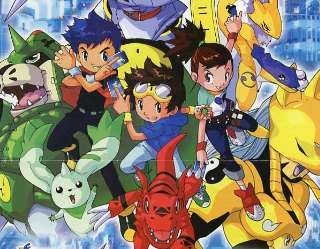
Digimon Tamers is my favorite season of Digimon. Unlike its predecessors, Digimon Tamers takes on a more grounded sci-fi approach to its premise. It balances indulging in childhood fantasy whimsy with darker, but appropriate, psychological and philosophical feelings. Digimon Tamers was the first season of Digimon I caught on television as a kid. It scared me (cut to the D-Reaper), but also really inspired my childhood creativity. Takato being the coolest kid in his class, saving the world, and getting to create his own Digimon? That was an imaginative kid’s dream. |
|
The plot of Digimon Tamers is interesting and well paced. The narrative takes its time to establish each of the three main characters, their routines, internal struggles, and unique relationship to their Digimon partners. The mystery and lore are slowly revealed overtime, but never too slow that the show is boring. I love that the lead characters are well defined; Takato is the leader type who is imaginative and emotionally vulnerable. Ruki is cold and rebellious on the surface, but develops into someone softer. Jenrya is a powerful pacifist who learns that sometimes conflict is inevitable.

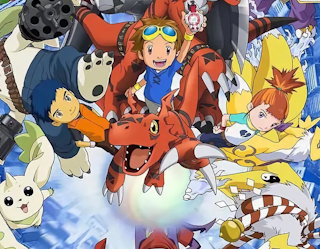
Aiding in the excitement are some of the best cut-away animations in the entire franchise. The evolution from the child stage to adult stage never gets old; EVO playing, the robotic “evolution” execution voice, the way the Digimon become wires frames… it’s amazing. These sequences are used sparingly enough that when they are included in an episode I never want to skip them (a stark contrast from other seasons that spend uninterrupted minutes showing multiple full evolution sequences).
|
This childhood fantasy doesn’t infantilize the show though. Far from it. Digimon Tamers includes proactive and compelling adult characters amongst its cast heavily involved in the plot and the conundrum of “how do we deal with a problem we don’t fully understand that only our children seem to be able to solve?” In this continuity, Digimon were created by humans, giving an added layer of pressure and stakes for these adult characters. This was a fresh choice for moving away from Adventure. |
Perhaps the most memorable, and child scarring, part of Tamers is its third act. Having the final antagonist of the show be a program created for deletion whose thoughts and memories are based on a little girl's depressed mind is dark but not unwelcome. Juri’s descent into mental illness is portrayed in a way that feels real despite the fantastical circumstances. She’s an excellent depiction of depression and channels a sort of “baby’s first Evangelion" type vibe.
If I had to lay down a critique for Tamers it would be that the animation could be really stiff and unexciting at times. This felt like less of a problem at the time, but comparing it to the kinetic energy of modern anime (and even some of its contemporaries) puts Tamers in an unfavorable situation. These limitations are perhaps what brought about the stronger narrative and character writing, but it is a fair critique nonetheless.

|
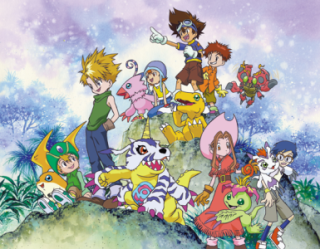
Digimon Adventure is a classic. I have so many fond memories of watching and re-watching this season; its colorful art direction, its large cast of characters, and great Digimon designs. The show strikes a perfect balance between childhood whimsy, cool monsters, and real character development. Digimon Adventure follows a cast of seven (later eight) children who are transported to a magical world and paired off with monster companions. They must fight for survival, learn to work together, and find a way back home. |
Unlike many subsequent seasons, Digimon Adventure focuses on its characters and their interpersonal relationships. Each of the kids, (Taichi, Yamato, Koushiro, Mimi, Sora, Jou, Takeru, and Hikari) are given enough screen time to feel distinct. A good amount of episodes split up the cast, who all interact with each other in different ways. An episode between Jou and Sora is completely different dynamic to an episode between Jou and Yamato. The characters are allowed to have conflict, but ultimately become friends. It's these story arcs that lead to the Digimon becoming stronger.
In no place is character development greater personified than the crest system. Each of the kids is assigned a crest that reflects their strongest trait - though this trait isn’t always apparent to them. For instance, Yamato is a quiet kid who is a little stand offish, yet he is the inheritor of the crest of friendship. When a character embodies their crest, it allows their Digimon to evolve beyond the Adult level and achieve new heights.
|
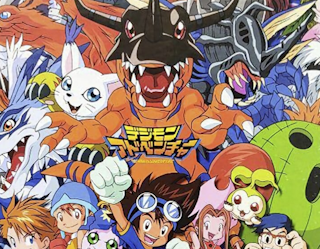
Digimon Adventure does not shy away from real world challenges kids may face, survival in a fantasy world aside. Some of the kids are dealing with divorce, finding out they were adopted, struggles with parental expectations, etc. Each of these are given importance, and present problems in a mature way. But the show isn’t Digimon without the Digital Monsters. I love this group of Digimon, they are so varied and colorful. Braveheart is the original insert song, and it’s what made me fall in love with watching the show subbed way back when. |
|
Sadly, Digimon Adventure is a show with budgetary constraints. While the core of the story is strong, the animation can be very stiff and lacking (a problem that plagues most of the early seasons). Many animations are reused, and Adventure relies heavily on playing out entirely evolution sequences to fill time. As much as I love them, I found myself starting to skip some after a while. These presentation issues have made it hard for me to get my friends into this season of Digimon; if they don’t have the nostalgia they don’t immediately understand the appeal.
Even so, Digimon Adventure is a show near and dear to me. It has been fun on every rewatch, and I wish newer seasons would learn some lessons from it.

|
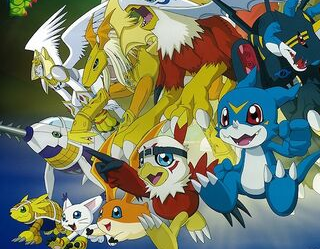
Digimon Adventure 02 is a mixed bag. On one hand, it continues the story of Adventure in some really unique ways and introduces some of the most iconic Digimon designs in the franchise. On the other hand, the story becomes a confusing mess that lacks the character dynamics of its predecessor. |
|
02 takes place several years after the events of the first season. The original cast are drawn back together as a new crisis faces the Digital World. However this time they will need the help of a new generation of Chosen Children consisting of three newcomers and the two youngest of the original team. This young group of Chosen Children are tasked with entering and exiting the Digital World at their leisure to free wild Digimon from the control of the evil Digimon Kaiser.
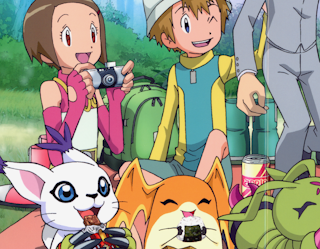
The beginning half of 02 is so strong in a lot of ways. There are a lot of great interactions between the older Chosen Children and new members. Armor Evolution, a unique style of evolving, keeps each episode interesting. The revelation that the Digimon Kaiser is not only a human, but a classmate, is also a great direction to take the series (although, the Digimon Kaiser’s identity should have been hidden for longer in my opinion).
|
The climax and confrontation with the Digimon Kaiser, Ken, is a high point of this season. The show dedicates time to allowing the audience to see Ken’s mindset and development as he reforms and becomes a member of the core cast. Ken’s trauma is given room to breath, and it’s so satisfying seeing him reform to embody the crest of kindness. Sadly, the show starts to lose me after this point. It becomes apparent after that the new Chosen Children don’t have a ton of depth, especially with each other. Aside from Ken, and maybe Iori, their interesting traits are only explored on a surface level. I wanted more episodes of two characters getting lost and forced to work together and grow closer. I thought that jogressing, the act of two Digimon fusing, would be the moment this happens but even that disappointed me. |
The plot gets so messy and meandering that I tend to forget what the ultimate goal is. The final confrontation comes out of nowhere, and by then I’m exhausted.
Still, there are bright spots. This group of Digimon is top tier. They all look so good in a lineup, and really look great on the color wheel. Songs like Break Up, Beat Hit, and the returning Braveheart give some great variety to evolutions. The theme song, Target, might be my favorite of any season.

|
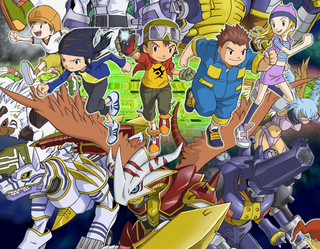
It’s no secret that Digimon Frontier is regarded as the “black sheep” of the original run. In fact, this was the dropping off point for many of the original Digimon fans. The main point of contention? The main human characters no longer partner with Digimon, but rather become that. Like many, I was initially turned off to this, especially since at that point in time I was more partial to the monster-esque Digimon over the humanoid designs. However, once I gave the show a chance, I found there was a lot to like. Without partners, the main cast gets more space to interact with each other and befriend native Digimon. Like Digimon Adventure, this group of kids aren’t afraid to disagree and learn from each other. |
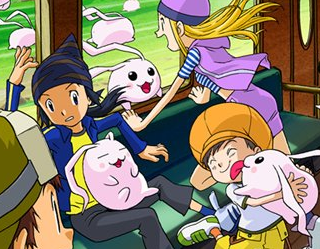
Frontier’s Digital World feels unique; a fantasy world connected by railroad tracks built on generations of warriors and lore. There are many Digimon towns, historians, fantastical vistas, and places that facilitate character growth. I found even the “filler” in the first half of the show to be great fun due to how much I was enjoying the characters and the Digimon they met. I especially like the falling out of the angel Digimon and the war between humans and beasts. It gives each of the warriors elements and designs more meaning; each child is taking up the mantle of a legendary hero.
| Unfortunately, the show fumbles a lot of its good ideas. While the character chemistry, and quest based storyline is strong in the first half of the show, it falls off hard towards the latter half. Following the defeat of Cherubimon, a new child, Koichi, joins the main cast. From that point on he, and anyone not named “Takuya” or “Kouji”, get sidelined. Instead of continuing to let the characters grow and evolve, all new evolutions are exclusively given to the two main characters. The story becomes a formulaic slog that is exhausting to watch. So much of the show’s early potential is just missed. (And don’t even get me started on how bad the one girl, Izumi, is treated). |
|
As far as presentation goes, Digimon Frontier goes back to a lot of recycled animation and indulging in long evolution cut-aways. These look great and have great music; With the Will and The Last Elevement kick ass! It just gets tiring after so many episodes.
Overall, I enjoyed Digimon Frontier. The characters, and the world they journeyed through, had a cozy feeling that was sad to believe behind. Frontier had potential to be one of the best seasons with just a few tweaks to its pacing and characters.

|
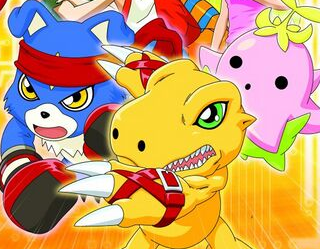
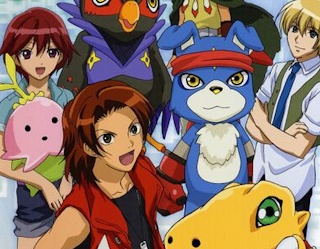
I followed Digimon Savers as it came out in Japan. It was the first Digimon season premiering when I had full internet access, so I could actually follow it. I remember seeing the pre-release images of Agumon 06, Gaomon, Lalamon and getting so excited. Rumors followed that this would be a more “grown up” season of Digimon with an older cast in a new animation style. It was also the first time a lead, Masaru, would not have the iconic goggles. |
|
I watched episodes as I could find them subbed. I even gave in and watched the dub where I could. I bought the DS games that came out, and tried to get merch as best as a self-conscious 12 y/o could. Even then, I fell off. I lost track of the show and it just left my brain.
|
It wasn’t until college that I decided to give the entire thing a watch. It has been many years since then, but I remember finding this season lackluster. Savers feels like the first truly “shonen” Digimon with a heavy emphasis on Masaru’s fighting and believing in the power of his friendship with Agumon to overcome. Character development from the rest of the case is scarce, which is a shame because there is room for interesting dynamics! Tohma is the levelheaded genius who naturally clashes with Masaru, Yoshino is a little older (and of course is the weakest because girl), and Ikuto was raised in the Digital World by Digimon. |
I do love a lot of the Digimon designs this season. Agumon 06’ is no replacement for the original Agumon (Bandai did push that for a while), but he is cool. Gaomon feels like a franchise staple, he’s such a cute little guy. I wish Lalamon didn’t have Rosemon for her Ultimate, but otherwise she’s a good plant line. Falcomon, Kudamon, Kamemon; they’re all great.
I might revisit this season one day, but I have no strong itch to return.

|
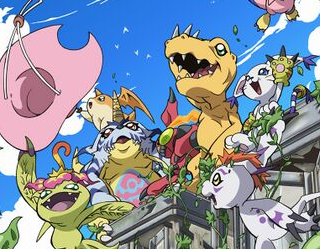
I know this is a series of movies, but Crunchyroll cut them like episodes and there are enough of these that I may as well talk about them. When Digimon Tri was announced, I was giddy. I had stayed a fan of Digimon, but hadn’t kept up with Xros Wars and thought the series was doomed. Especially in the West. Then, suddenly, we were being promised a continuation of the original Digimon Adventure series. The original cast would be back for six movies. The artwork was unique and gorgeous. It was an exciting time! |
Unfortunately, the movies took a long time to come out. Hype between each release began to gradually decline, as did the quality of the animation.
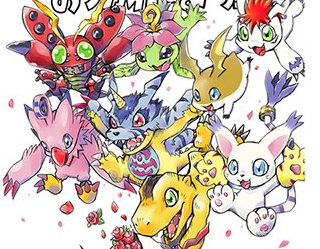
Digimon Adventure Tri, similar to 02, has a strong start. The episodes feel like reconnecting with old friends as the original cast of characters reunite with each other and their Digimon. It’s really special to see the other kids’ Digimon reach the Ultimate level. I also really like some of the new Digimon designs introduced, especially Meicoomon and Omegamon Merciful Mode.
|
Speaking of the cast, it’s disturbing that Daisuke, Iori, Miyako, and Ken are missing for the entire show and no one seems to care. I remember initially being okay with this (I was a 02 hater at the time), but now it feels cruel. They could be sidelined without the rest of the kids ignoring them. This is where my headcanon that Takeru and Hikari secretly don’t like the 02 exclusive kids comes from lol. |
|
I’m glad Tri happened. I think it did bring back some life to the Digimon franchise and gave some of the original cast great moments. It just needed a bit more refining!

|
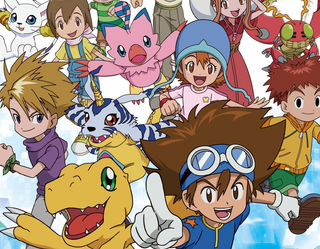
All style. No Substance. In late 2019, Toei debuted the last chapter of the Digimon Adventure series, a movie called Digimon Adventure Last Evolution Kizuna. The movie was a heartfelt goodbye to the cast of Adventure and Adventure 02, and ended on a bittersweet note as Taichi and Yamato lose Gabumon and Agumon for good. The film seeks to bring closure to the fans who grew up with Digimon, while also presenting a message of letting go of your nostalgia. |
|
Imagine the collective surprise when only a few months later Toei announced a reboot for Digimon Adventure in the form of Digimon Adventure: 2020.
The promotional materials promised a new adventure with a familiar looking cast. Indeed, the art style deliberately mimics the original in its character designs, proportions, and coloring, yet has just enough differences to distinguish itself. All the old Digimon partners were back in accounted for, now with the alluring prospect that this time the audience would see more evolutions.
Initial confusion aside, the prospect of a new Digimon airing live was appealing. The original Adventure is remembered often for good reason - it had strong characters who underwent significant, and relatable growth, as they grew up. At the very least a reboot could surely capture that, right?
|
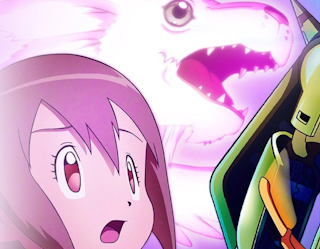
To be clear, I don’t hate Digimon Adventure 2020. It has some of the best music in the franchise (Be the Winners, X-Treme Fight, Break the Chain). The animation looks amazing, it’s so awesome to get a season of Digimon with dynamic fights paired with great music. The evolution sequences for Agumon and Gabumon are incredible, some of the best in the series. New evolution paths for old Digimon kept parts of the season fresh and made coming to it week to week fun. The hype fights were also great to work out too. |
But that’s really it; all presentation.
There is no consistent plot this season. The story is paced poorly with the frontend loaded with 14 straight evolution episodes from adult to perfect. Later encounters drag out with no real weight to them because the characters never interact in meaningful ways. All the focus is on Taichi and Agumon with everyone else just being sort of “nice”. There is never friction or disagreements or getting to know each other better. Everyone is one note.
It baffles me that the mid-part of the show is full of high stakes fights, while the backend is full of light hearted filler. The Ultimate forms of the Digimon appear so late in the show that it made me wonder why getting to Perfect was such a rush.
It’s unclear if the pandemic screwed up development, or if something deeper happened here. Digimon Adventure 2020 is pretty to look at, but doesn’t hold a candle to the storytelling of its predecessor.

|
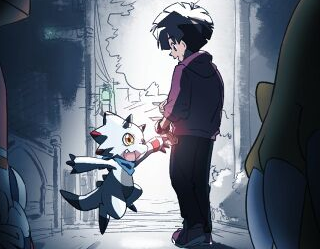
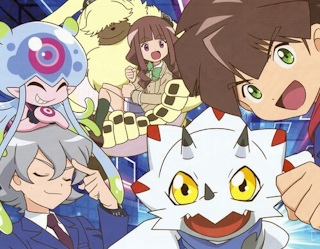
I was ready to love Digimon Ghost Game. When I saw Gammamon, Angoramon, and Jellymon I instantly fell in love. Their designs were spectacular! And they would be the stars of a horror season of Digimon; a season where one of them would have an evil evolution. There was a lot of potential here. |
|
I think I would have liked this as a kid, but I crave something with more substance. It would have been really cool to unravel the mystery of Hiro’s dad and Gulusgammamon before the last two episodes. And, once again, the Ultimate Digimon appear way too late and get way too little screentime. |
|
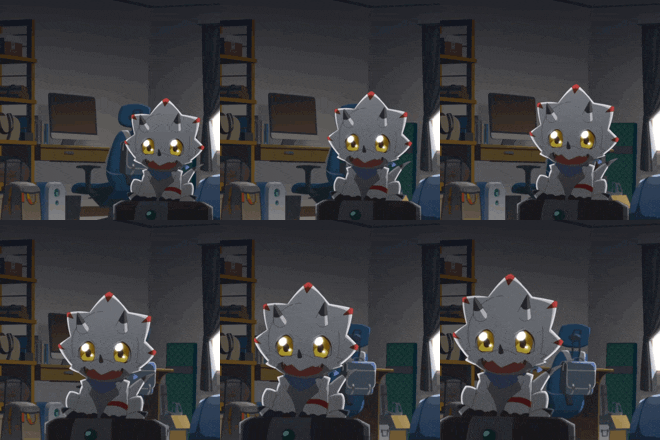
Image rips were provided by Wikimon.net
Gifs credited to Geocities.org
Digimon Reboot original characters are © 2010-2020 to Rebekah L., Keisha P., and Zuza J.